CN June 8 2017


The youTube video is above, and the SoundCloud audio-only link is below.

In the first half of this two-part show, NBC5’s Mary Ann Ahern joins us to talk Pritzker, Blago, Rauner, Emanuel, journalism and Medicaid.

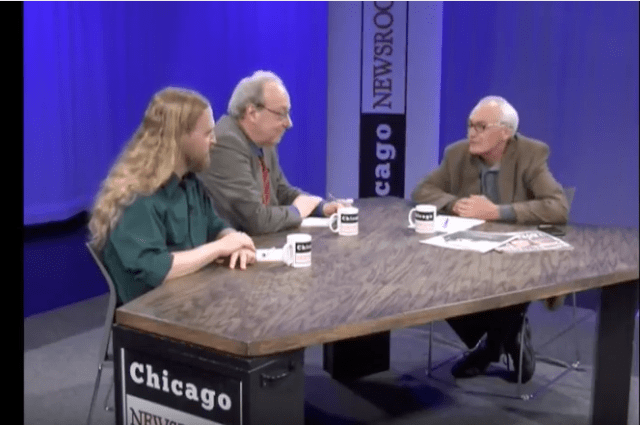
And later, we’re joined by Phillip Montoro of the Reader and David Roeder with the  Chicago News Guild to talk about the situation with the Sun Times and Reader.

The spring primary to decide the Democratic candidate for Governor of Illinois seems already to have concluded. At least that’s what the party leaders would have us believe. The formal endorsement of Pritzker this week by the leadership of the AFL-CIO seemed to fortify the idea that the billionaire was unstoppable. But just a few days ago he seemed vulnerable.

He had weathered a story in the Sun-Times about how he had managed to dramatically lower his property taxes, and then the Tribune hit hard with recordings of the candidate on the phone with Rod Blagojevich.

“And as I hear it,” Ahern begins, “Everyone is wondering where did they get the tapes, and who knows if this is absolutely correct, but that the Tribune was sort of aha, why didn’t we know about that property tax? So they start digging and their reporter who had written one of the books on Blago – ‘Aha, you know I think I recall.’ And so they find these tapes and yes, the tapes are damaging because everyone in the world at this point, this conversation one of them was literally a week before the former Governor is arrested, if you didn’t know that he was under investigation you had to be under a rock at that point. I mean we all knew for about two years.”

On the tapes, Blagojevitch and Pritzker discuss the governor’s possible appointment of Pritzker to Obama’s Senate seat or to the State Treasurer job. “And then asking a couple of times about this… that’s what folks do, they definitely ask, but there was this implied how much money are you going to give me for it kind of deal.”

“So, now, a week later, five days later, the AFL-CIO – whoa, we’re going to endorse Pritzker,” she continues. “Well, it changes the subject certainly. It’s way too early, way too early. What, we’re ten months or nine months away from a primary race. The old adage of Labor Day. Boy that’s blown out of the water.”

But, as Ahern points out, “Let’s also remember that the AFL-CIO endorsed Dan Hines in the U.S. Senate race against Barack Obama.” That Senator Hines thing never came to pass.

There are all kinds of theories about why party leaders have been so anxious to lock in their billionaire friend, and Ahern has one of her own. “The Union might not have to give much money to the Governor’s race, but instead focus on some races further down,” she explains. “Some heated House and Senate races, that they have lost a couple of them to Rauner, so if Pritzker doesn’t really need their money that much, maybe he needs the feet on election day, that kind of thing, that this allows them to spend their money on those races further down the ladder.

But that doesn’t solve the enthusiasm problem. “And, you know, we certainly have seen the Bernie Sanders folks of the party, the progressive Democrats, are they going to embrace J. B. Pritzker when Pritzker was such a Hillary supporter as well?”

Many Chicago Democrats assume that Bruce Rauner is vulnerable, but Ahern says he’s still very popular downstate in some the collar counties. “This week he was along Hegewisch, the Indiana Illinois border, speaking with some businessmen who would say thanks a lot, everybody is going to Whiting. We’ve got businesses up and down this street that are closing down. You’ve got way too many regulations, too many taxes.  So you know, there are certainly folks who support Rauner and say they like that outsider. They like his message of what he has to say, and for all those folks who think the polls say he doesn’t have a chance, forget it. I don’t think I’ll ever believe another poll again.”

Ahern says a big story that’s still developing is the push by Medicare recipients to have their unpaid bills moved to the front of the Illinois payment line.

“Suzanna Mendoza, the comptroller is saying ‘you know what, I can’t prioritize these payments.’ Medicaid and the providers, the healthcare providers are saying you guys are way behind. Pretty soon here the doctors are going to say no to Medicaid patients because they haven’t been paid in so long. And so they’ve gone to court and asked her to make a ruling and say, ‘Put the Medicaid people at the top of the line.’ And she said, “Well, keep negotiating for two weeks. Let’s see if we can get this. I agree. We have a consent decree and you guys are supposed to get paid. I’m not putting you at the top of the line yet, but work on this. The State and the Medicaid providers, if you can’t come to a solution come see me in two weeks.” If that happens someone else doesn’t get paid. Pensions or schools.”

So the State of Illinois, billions and billions behind in paying its bills, may shortly have to send schools, pensions and human services even further down the list.

“Maybe Judge Lefko could call the Four Tops and the Governor in,” Ahern muses.    “And say, “Guys, we need a deal.”

======
Screenshot 2017-06-08 20.19.59

In segment 2, we examine the possible sale of the Sun-Times and the Reader to tronc, the company that owns the Tribune and dozens of other smaller publications.

Wrapports, the company that owns the S-T and Reader, was originally founded by Michael Ferro, who now manages tronc. Are you following this? When Ferro gained controlling interest in the company that owns the Tribune, he renamed that company tronc, and removed himself from Wrapports. So if he gains control of the S-T/Reader, it’ll be the second time. And the entity Wrapports has to satisfy is the Justice Department, which could find that the sale violates anti-trust law.

The question remaining is whether Wrapports searched far enough to find a buyer before offering itself to tronc.

Phiip Montoro, who doubles as the Reader’s Music Editor and union representative, thinks not. “Clearly they didn’t beat the bushes as thoroughly as they could have because we’ve managed to find some bidders in a very short timeframe,” he claims.

“However, we do believe that the Wrapports board would like to keep the Sun-Times and the Reader around,” adds David Roeder, who represents the Chicago News Guild. “I think an element of the board would like to keep the publications independent of the Tribune, but they do want out, and so that’s where we are. They have accepted a so-called non-binding letter of intent from Tronc while asking for other bids in a process that is being overseen by the Justice Department.”

So where are we?

“There’s a bid that has been made by Edwin Eisendrath who is a former Chicago alderman. He ran for Governor about ten or 11 years ago, and he has been working very hard to put together money from other sources,” explains Roeder.

There might be at least one other potential bidder, Neil Bluhm, a major Chicago developer. Others have reported that he missed the deadline for filing and won’t be considered. Roeder says it’s still possible that Justice could hold the door open for him a little longer. “The deadlines are not hard and fast,” Roeder claims.

Both men are at a disadvantage because Wrapports has no requirement to share its propriety information, such as finances, with them. “And we understand that,” says Roeder. “But in some ways I guess we are allies and we would like to see the jobs preserved and the titles preserved.”

So often these difficult bargaining sessions set co-workers against one another. Jake Malooley, the Reader’s Editor, is considered management, so he has sometimes sat across the table from Montoro. “But I bring this up only to say that he has expressed to us support for the no news monopoly campaign,” Montoro explains. That is, he thinks it is a good idea to do whatever we can to stay the Justice Department’s hand and to let other bidders enter this process. I mean we’ve had experience with Michael Ferro when he was at Wrapports. It was not a salutary experience.”

And there are questions about how committed tronc would be to keeping the Reader alive, according to Montoro. “They wouldn’t be required to in order to avoid anti-trust sanctions, because I guess there are other papers in the City that would count as alternative weeklies…We don’t print with the Tribune company. They don’t have the source of revenue from us the way they do with the Sun-Times, and they just turned the Redeye into a weekly.”

“I think if you look at the history of newspaper mergers these just don’t work over the long-term for the weaker newspaper,” Adds Roeder. “The advertising staffs get absorbed and they always have the incentive to sell to the bigger audience, the bigger product.”

“That’s already happened within Wrapports with respect to the Reader and the Sun-Times,” Montoro continues. “There have been consolidations of business functions that have ended up hurting the Reader, that is we don’t have a dedicated circulation manager anymore. We don’t have a sales manager. We don’t have our own publisher, so there’s really nobody specifically looking after the health of the business at the Reader anymore…I think I can fairly state for the Sun-Times staff that is their fear and certainly for the Reader staff as well. We just don’t feel that Tronc has any incentive to keep things going. Once they operate things for a while, maybe a year and a half, two years, and then they can say to the Justice Department, “Ah see, it failed. We gave it our best shot.”

We talk briefly about the possibility that an investor could buy only the Reader and re-invest in it. It would be expensive, Montoro maintains, because the new owner would have to restore the circulation and sales people. But the Reader’s got some assets, such as the Straight Dope column and web site, which is very heavily trafficked. More well trafficked than most people realize, he maintains.

So where does this all lead?

“The bids will be evaluated by the company and by the Justice Department. Probably around the middle of the month they will decide okay, this looks the best,” explains Roeder. The union will have no say in the decision.

If you’re interested in more info, or getting involved in the issue, the guild is maintaining a site at No News Monopoly.

And Phillip Montoro, whose watched the steady disinvestment in the Reader, has the last word. “It’s long been our contention that having learned how to do more with less, that if we actually got any more we could really thrive.”

You can read a full transcript of this show here: CN transcript June 8 2017
Posted in Chicago Newsroom past shows | Tagged , , , , , , , , , , , , | Leave a comment

CN June 1 2017


Here’s what Natasha Korecki said in this morning’s Illinois Playbook:

This is a day you’ll want to buy hard copies of the Sun-Times and the Tribune, sit down with a large cup of coffee, and read. There’s that much news; not just hard news, but impactful investigative pieces that warrant your attention, involving the Chicago Police Department, the Democratic primary race for governor, the future of the Dept. of Children and Family Services and the future of Illinois.

So this was a good day to have Sun-Times columnist Mark Brown and Tribune City Hall correspondent Hal Dardick at our table.

J.B. Pritzker, who’s been the favorite candidate for governor among most Democratic politicos, may have suffered some damage after yesterday’s Tribune story about his contact with disgraced Gov. Rob Blagojevich.  “I think it puts him at great risk,” says Dardick of his own paper’s revelations.

“Back during the Blagojevich investigation J. B. Pritzker had been recorded on tape talking to Blago,” Brown explains.  “He started off talking about the senate seat seemingly, and then Pritzker said, “Hey, could you make me state treasurer?” in essence. And oh Blago liked that idea, because he was trying to milk people at that time for somebody to give him some sort of parachute to get out of office, or at least to get him some big campaign contributions. Pritzker didn’t seem to play ball. I don’t know that he did anything wrong, but you know if you’re running for Governor of Illinois right now you don’t want to be, as a Democrat, you don’t want to have people spreading around tape recordings of you seemingly conspiring with Blago.”

“These were federal wiretaps that we obtained at the Tribune,” Dardick tells us. “I think what’s most interesting about these, and you can listen to them online too if you want – we have a transcript of some of it, but what I think is most interesting is that by this point you have J. B. Pritzker who has to know that Blagojevich’s administration is under investigation by the Feds. There’s already been someone indicted in the administration. There’s been a lot of talk about the campaign contributions and whether they were right or wrong during his tenure. Of course, some of that stuff brought him down, and he continues to talk to him about who would you appoint to the senate seat? He says things like, well if you appoint President Obama’s aide Valerie Jarrett the reason that that’s good Pritzker says is because then you might get an appointment.”

“He says you ought to get an appointment for that, you know,” Brown adds.

Dardick continues, “and the thing that I guess really struck me was that at one point he is asking Pritzker, “Well I need money by the way for my campaign. Can you help me out?” And Pritzker goes, “I don’t know if now would be a good time to do that.” Then he says, “Well you have people that could could contribute money don’t you?” and Pritzker says, “Well I hear you.” He didn’t say, “Rod, I just can’t do that. That wouldn’t be appropriate,” so it raises a lot of questions.”

So is this an opening for Chris Kennedy to leap-frog over Pritzker?

Dardick says Kennedy’s taken some positions that will anger the most powerful Dems in Illinois. “The interesting thing about Kennedy is he might have been able to step in at this point and say, “You know I should be the party candidate,” but he’s already come out earlier this week and criticized a number of people in the party and proposed things that would upset Michael Madigan and Joe Berrios that would affect their income directly. He’s portrayed himself as, even though he’s a Kennedy, as the outsider and the guy is going to take up and straighten out the Democratic party. So I don’t think he can step in and be the anointed one.”

“What Kennedy has done that’s different,” Dardick explains, “is he’s said that folks who are in public positions shouldn’t be able to do property tax appeals business, which would of course be what Madigan does and what Ed Burke does on the City Council. So he’s taking a shot at the honchoes of the Democratic party, and that no other candidate has done.”

And, according to Brown, it’s not too late for Pritzker to recover his public image, because he’s done good things with his wealth. “The things he hits in his commercials to my knowledge are by and large true. You know he put his money, he’s used his money well. In the early childhood education field he is by far the guy who is out there the most. He’s way ahead of…you know, he basically funds the Rauners on that kind of thing believe it or not, and all over this country, so he’s considered to be a very substantive guy in that field.”

“And,” Dardick interjects, “the tech startups.”

” 1871 I would say it’s probably the pride and joy of Chicago right now,” adds Brown, “and 1871 is J. B. Pritzker’s vision, and knowing where to put his money. So the guy has got some good things to talk about here, so why doesn’t he be smart about stepping up and dealing with these problems? And honestly, I think he’s getting really bad advice from his people.”

So, it’s time for the obvious question. Can Pritzker, or any other Democrat, beat Bruce Rauner?

“Well, I think it’s clear almost any of them would have a shot at Rauner,” Brown asserts. “They would have to overcome his money and his ability to stay on message and run a very focused campaign that just kind of zeroes in on the anger of people towards politicians. Unfortunately for him at this point it’s pretty clear that a lot of that anger is directed at him. People don’t think he’s got anything to show. I certainly don’t. So he’s beatable, but it’s going to be tough for anybody.”

As the Legislative session ended yesterday, without a budget, it could be noted that a budget did pass. But only in the Senate. And it includes a tax increase, so now Bruce Rauner’s got something on the record he can hang around the Democrats’ necks.

“And so the Democrats in the House, you know, didn’t want to volunteer for that duty, and I kind of wish they would have and we would have had a clear okay, this is how we think we should do it,” Brown laments.

Ironically, both guests report, there are Republicans who are willing to negotiate with Democrats and might support certain tax increases, but the Governor keeps is Republicans in line.

“The bottom line is they know he’s not going to let them get out there,” Brown asserts. “I mean, there definitely are Republicans who would vote for a tax increase who believe they are going in the wrong direction, but they don’t want to get thrown out of office either.”

“It all goes back to the money that he’s got to throw around,” adds Dardick.

The Legislature also passed a bill that changes Chicago’s CPS Board to an elected body. But that body has 20 members, each from selected districts. “The version that passed the Senate late last night has 15 people, still a lot,” Dardick tells us. “The problem is those bills would have to be reconciled at some point, so that’s not a bill that can go to the Governor yet. And will it go to the Governor or are they just playing to their audiences in the byzantine ways of Springfield? I don’t know. It’s very uncertain at this point. I can’t imagine Cullerton let that get out of the Senate and would he do that if he thought it was really going somewhere considering his relationship with Rahm Emanuel? Just to say I’m skeptical.”

And Brown, who’s seen this movie before, isn’t impressed. “So that’s an old game that gets played where everybody can say they voted for it, but it still doesn’t happen.”

The Legislature also passed what could be a very important bill that re-figures the way schools are funded by the State. Could this become law in Illinois after years of debate on the inequity between schools in poor communities versus the wealthy?

“I would say that Senator Andy Manar who has worked on this is one of the bright lights in Springfield,”Brown points out. “A sharp thinker, worked really hard at it from a standpoint of trying to meet the needs of both down-state rural districts like his and the City of Chicago. So if they’ve come to an agreement, you know, it may not be a perfect agreement, but you know, I’ve got to believe that it’s a reasonable political compromise. Now, I know the Governor is making noises about it does too much for Chicago. I have not been able to analyze that in detail to figure out whether we really are pushing one over, but I’ve got to believe it must be pretty close to what would be good for… It’s just good public policy, that there really are people looking at it from that point of view. It’s not going to make the suburbs happy though.”

“As I understand it, at this point everybody is still trying to sort it out because it was such a last minute thing,” Dardick interjects. “I asked Claypool about this the other day. I said, “What would satisfy you?” He says, “If we got $500-million more we would be a parity with the rest of the State by their calculations.” We’ll have to see what those numbers actually are. The caveat is again is if the Republicans didn’t put any votes on this it’s probably DOA with the Governor.”

Up in Jefferson Park a heated battle is being fought over a proposed 100-unit apartment building very close to the CTA transit center. What’s most controversial is that 80% of the apartment would be set aside for low income people, including seniors, veterans and the disabled – along with some people using CHA-issued vouchers. Brown has written on it several times, and has heard from both sides.

“There are tempers and there are people from all over the northwest side who have gotten involved in this on the anti-side, including Alderman Napolitano of the neighboring ward, 41st Ward, and there are people from all over the City that have gotten involved on the side of the pro-forces who are accusing the anti-forces of being racist.” Brown tells us. “And in my opinion there certainly is a racial element that has crept into this, although people argue it’s a matter of density, and a lot of people would argue that affordable housing, they see the problem of affordable housing as not as racial, but economics or what’s going to happen. It’s all the old fights, and it just kind of roared up out of nowhere to me. Now actually, somebody tried to build this building in another ward and it had gotten shut down, which is why everybody was geared up when they went into Arena’s ward.”

Why, we ask, would a lone Alderman want to take on such a divisive fight in his own Ward, setting his constituents into such a toxic battle?  “Well, John Arena is one of the leaders of the progressive reform caucus and I think he does see this as the right thing to do,” Dardick explains. “And I think he’s a smart alderman and knows what he’s doing, but …John can…he’s got a little bit of a temper that shows up sometimes and he’s very certain about himself, and so he hasn’t done what some politicians would do to assuage the opponents, you know, compromise and say ‘this is right, I’m going to do it.’ So I think that’s gotten him into a little trouble.”

And he’s drawn the Mayor into the battle, too. Emanuel criticized Arena, saying he didn’t do proper community process, and now the Mayor is being criticized by the building’s supporters, implying that he’s fostering stereotypes about the community. This story will be with us for a while.

Inspector General Joe Ferguson opened a large can of worms this week when he reported that  a lot of contracts with City workers are expiring in a few weeks. They were negotiated as ten-year deals by Mayor Daley to assure the there wouldn’t be any labor disputes during the Chicago 2016 Olympics. Remember the Olympics?

“So all these contracts,” Dardick explains, “44 of them, either came due last June or are coming due all but one this June and then one in December, 44 contracts representing more than 90% of a workforce of 32,000-plus people.”

So that’s a lot of negotiating the City has do do. And coincidentally, police and fire contracts are a part of this. “But it’s interesting,’ Dardick adds, “Because those contracts you are referring to, which are most of these 44 contracts that Daley approved in ’07 and last through June of this year had really nice raises, at a time when maybe he thought the City could afford it. It was at the end of the boom, before the housing bubble burst and everything came crashing down, and since that time the consumer price index has increased 11-point – something percent the cost of living, and the salary increases they got came in at about 27 or 28% over that ten years, so they did very well.

So, Dardick says, Joe Ferguson sees this as a great time for the City to negotiate ways to save some serious money.

“Maybe instead of paying prevailing wages to all the workers,” he explains, “In other words what people get paid in the open market, maybe they don’t need that because they have secure 40-hour a week 52 weeks a year employment whereas people in the private sector can’t be assured of that. But he takes on all of these sort of sacred cows of the union…You’re going to see a lot of this talk and it could save the City tens of millions of dollars, if not more, if they did take on some of these sort of cherished perks.”

But prevailing wage seems pretty safe. As Brown says, “The Democrats are trying to fight that one with Rauner.”

The concerns over wages and work rules seem almost insignificant, though, when compared with reforms in the police contract. As Dardick explains: “Efforts are made to reform the department to give the public confidence that misconduct allegations are thoroughly investigated, and that when wrongdoing is found that people are actually appropriately disciplined. The Justice Department, the Mayor’s Task Force all talked about how these rules sort of give police 24 hours, which some people allege give police time to collude and get their stories straight, and there’s a whole bunch of other things that they think impedes the proper investigation of these things and reduces confidence in the Police Department. And I think it’s something that the Mayor politically if he wants to run again has to address.”

And none of this takes into account the fact that the police force just elected a new leader who’s far less willing to compromise, says Brown.

“So, one of the problems is that at some point the previous FOP Union President had said well if you want any of that you’re going to buy it. In other words, you’re going to have to give us more money. I think the current FOP President is of the opinion that you’ve got to give them the money and those rules or you can’t touch them. [Laughs] So there could be some issues there.”

You can read a full transcript of the show here:CN transcript June 1 2017

And if you can find the time, get outside on a beautiful June day and take the show with you as an audio download at SoundCloud right here.

Posted in Chicago Newsroom past shows | Tagged , , , , , , , , , , , , , , , , , , | Leave a comment

CN May 25 2017

What will a tronc-absorbed Sun-Times and Reader look like? Does anybody believe the claims that tronc will allow both to operate their own newsrooms independently?

With Sun-Times circulation dropping below 130,000 per day, there are more people watching the ten-o’clock news just on Channel 7.  So has our Number Two Newspaper slipped into irrelevancy?

Two seasoned media observers, both experienced creators of content on multiple platforms, join us today.

Both Thom Clark and Scott Smith fear that the web sites for the Sun-Times and Tribune aren’t where they need to be, and with huge numbers of people using the digital, rather than printed, versions of their products, that’s a problem.

“I mean the Sun-Times really has a website that almost dares you to read it,” Smith says. Both Clark and Smith say that there’s not enough original, local content on the sites to make them competitively valuable to digital consumers. “Then you start to say well I don’t know how much value visiting this website has,” Smith explains. “And the bigger more important thing is it’s really hard to drive a digital subscriber then. Because a person who is a digital subscriber is only going to fork over money for original content that’s of high use and high value to them that actually matters to them.”

Newspaper organizations, even big ones – are facing difficult times in their digital spaces, our guests say, because there’s so much competition for digital subscribers.  So the papers are “trying to squeeze as many digital display advertising dollars out of their readers as possible, even when everything that we see says that that business is declining, and not just the CPMs, not just the money you get for running those ads, but just the interest that readers have in that and the value they see in ads is also in decline,” says Smith.

We talk in some detail about the fate of the Chicago Reader.

“I think you could probably pick up The Reader for $3-million,” Smith claims, “And you would be getting an incredible product, particularly when you think about the amount of money that most of those staffers are being paid…They’ve also been doing a really good job of partnering with some of these sort of news lab startups like City Bureau and the folks over at Southside Weekly and Invisible Institute. I mean there is some incredible reporting happening on that street level kind of thing that could with the right marketing and the right visibility really take off. And that’s one of the complaints that The Reader’s staff has had is that it’s not just about the reporters’ salaries, it is the amount of sales and marketing resources that have been pulled from it as the Sun-Times has been struggling.”

And we touch on the perennial topic – how you gonna pay for journalism and journalists as the advertiser-funded print model vanishes?

“I think what’s significant here is the extent to which news consumers are relying on the free internet,” Clark explains, “because they kind of got trained that the last generation as newspapers tried to catch up. And I think the only way we’re going to keep good journalism, however you want to define good, going is through paid subscriptions of some kind, because that’s how you pay the bills and you buy journalists time to really do good journalism. How we get those dollars and on what platform I don’t think anyone has quite figured out yet.”

Ultimately, though, Smith asserts that an even bigger issue than finances is getting news organizations to figure out who they’re serving. Sites like DNAInfo, Capitol Fax,   The Wall Street Journal, Crain’s and The Daily Line – all serve specific audiences with specific needs, and are able to persuade their customers to pay for the service because it’s uniquely valuable to them.

“So the question is for the Sun-Times and the Tribune and for ProPublica and everybody else, is what part of the audience, since it’s so big now online, what part of that audience are you going to focus on, and what do they need from you the most?” Scott concludes.


Posted in Chicago Newsroom past shows | Tagged , , , , , , , | Leave a comment

CN May 18 2017


As  a direct result of Obamacare,  lots of people in Illinois have health insurance who never had it before. “I’m very grateful to President Obama for making healthcare part of his public legacy. Almost half a million people, 480,000 people in Cook County got healthcare coverage through the Affordable Care Act, half a million people, and across the country it’s 20-million people,” Cook County Board President Toni Preckwinkle tells us.

But the even better news is that “In our own health system before the ACA about 70% of our patients were uninsured… and now the reverse is true. About two-thirds of our patients are insured and one-third are uninsured. So, what we’ve seen is not only lots more people getting healthcare and the security that brings, but also public health institutions… have also seen real benefits to their bottom line as a result of the fact that more of their patients have insurance.”

“In 2010 when I was elected the taxpayers of Cook County were contributing $400-million a year to our healthcare system,” she continues. “And in this last budget it’s like $111½ or something like that, so there’s a $300-million difference. Some of it’s efficiencies over the last six years, but most of it is the substitution of federal dollars for local dollars. The federal government took on the obligation of trying to provide healthcare for the uninsured across the country in those states that were willing to become part of Medicaid expansion. And that has been a godsend for the individuals who got the care, who got healthcare coverage and a godsend for public institutions like ours as well as our hospitals and clinics across the county whether they are public or not.”

In  fact, the medicare expansion under Obamacare has not only put the Cook County Health and Hospital system in the black for the first time in its 180-year history, but it’s forced the institution to consider something unimaginable even a year ago – competition for this now-insured patients.

“In the past nobody wanted our patients,” she says. “They were poor people with complicated illnesses. Often multiple issues that were challenging them, diabetes and hypertension at the same time or struggles with cancer, and we were a provider of last resort, and we took anybody who came to our door. We still do regardless of their income, their insurance status, their citizenship status. We take anybody who comes in our door, and that’s been a blessing for Cook County for 180 years. But as a result of the Affordable Care Act and the fact that people have insurance now they can choose, and so we’re an environment which is competitive for the first time for us, and the real challenge for us is to up the quality of care that we deliver and peoples’ perceptions of us. You know I think if you ask people they know that our emergency room is a world-class institution. If you have trauma, if you’re shot, if you’re in an automobile accident…burned, that’s the place you want to go. But we have a world-class institution across a number of specialties, and what we’ve got to get out to people is it’s not just our emergency room that’s wonderful, it’s more broadly the care we deliver…That means that we have to both market ourselves and deliver services in a way that we haven’t been forced to do before.”

So what happens when the Trump administration finally gets its legislative act together and abolishes, or severely restricts, the ACA? What will be the effect on Cook County and its taxpayers?

“It’s not just that we will lose the federal support for the people that in our own Medicaid expansion plan, which is called County Care, about 145,000 people, but that people who are in other Medicaid expansion programs, and ours isn’t the only one, Blue Cross Blue Shield has one for example, some of the private insurance, people who are covered by those programs as well will come to us by default, as people without insurance in the past have always come to our public health system. So we estimate the impact is at the minimum 300-million, but it could be as much as 800-million. And we only have a budget of 4.2-billion, so that’s a pretty big hit,” Preckwinkle explains.

In fact, with White House leaks, an independent counsel and possible Russian influence over the administration, Preckwinkle says the only slight ray of optimism is that “all the things that are happening, it seems to have moved attention away from substantive issues like healthcare.”

It’s a wide-ranging, hour-long discussion, and you can read the full transcript of the show here: CN transcript May 18 2017

The following are some selected highlights from today’s discussion.

On Bruce Rauner’s inability to get a budget passed for two years:

I mean the first obligation of government at whatever level you are is to, if you’re the executive propose the budget and then get it passed. And the fact that when Rauner came in he said, “I’m only going to work with them on the budget if they do X, Y, Z,” term limits and workman’s comp and whatever else he was talking about. You know, when I came in there were things I wanted to do too around affordable housing, around consolidation in government, around immigration, but I never said to the Board of Commissioners I will only work with you on the budget if you work with me on these other things. Government operations is one thing, and then your substantive agenda on these other issues is another, and your first obligation is to get your budget passed, so we’ve passed balance budgets for the last seven years.

On how running a government differs from running a business:

You have to deal with people who got elected on their own, who have their own ideas, their own vision, their own constituencies. You’ve got to persuade people, make deals with people. You have to build a consensus for what needs to be done and then move ahead with it. You can’t just give people orders. You can’t say, “I want you to change workman’s comp laws. I want you to enact term limits. I want you to do whatever else it is,” and think that they’re just going to do it, they won’t. And I don’t know, particularly given the strong leadership in the President Cullerton and Speaker Madigan how he felt that he was going to just tell them what to do and they would do it. And then I think he got himself boxed. When he finally figured out that wasn’t going to work he had already said that these were the conditions on which he would work with them on the budget.

On the impact the budget mess is having on Cook County:

You know the state owes us as of this month $107-million.  $107-million, and they’ve owed us as much on a monthly basis as $183-million. The range has been $57-million to $183-million… But all of our local units of government are impacted by the fact that we don’t have a state budget. I think people don’t understand that. And in our county we’ve been able to manage it, but for units that don’t have reserves they are either borrowing money or cutting services, you know, or laying people off. I mean this is a nightmare.

On the national perception of Illinois:

Social service agencies are being devastated. Local units of government are really challenged because the state is not paying or paying nine to ten months late. Our higher education institutions are really struggling, and then we’re the only state in the country that hasn’t had a budget for two years. It makes us look like we are hopelessly inept and dysfunctional. It’s hard to argue that we’re not.

On whether Bruce Rauner is vulnerable in his re-election bid:

I hope and pray…I think he is. I think we have to get the word out about the devastating impact of his failed leadership on ordinary people in Illinois. And I think the poll numbers for him are below 50% that think he’s doing a good job, so if you’re an incumbent and theoretically you’ve been working hard for your constituents for the past three years, it’s hard to argue that’s a good thing…You know, I think his governorship has been devastating for the State Illinois, so needless to say I’ll be working hard to make sure that he’s not re-elected.

On prospects for significant police reform with the Sessions DOJ:

I think external pressure to perform better would have been helpful in the Chicago Police Department. It’s clearly absent now. Attorney General Sessions has said, “Whoa, we’re not going to look at local units of government and how they police their communities. We’re not going to engage in these kinds of audits of performance that we engaged in before.”

On a conversation with a CPD Commander about resources:

One of the commanders said, “It’s not just that I don’t have enough police officers, I don’t have enough sergeants to manage my officers on the street well or enough lieutenants to manage my sergeants.” It’s not so simple as we need more officers on the street, we need a command structure that needs to be enriched and supported, so that’s a real challenge. You don’t provide continuing education. You don’t have enough officers, and then there’s a culture… I’m sorry, I think we have profound struggles with racism in our Police Department, not just here in Chicago, but across the country. This is a national issue. It’s one of the ways in which the pervasive racism in our country manifests itself, how black and brown communities get policed.

Police treat black/brown kids differently than white kids:

African Americans and Latinos are together 50% of the population of the county, but 86-87% of the people in the jail. It’s a reflection of how black and brown communities get policed particularly in the City of Chicago, where most of the people who have come into our criminal justice system reside. And you know, black and brown people get arrested for stuff that white people never get arrested for, low level drug possession.

I had a conversation with a judge who came to see me, a person who I had supported, and she said, “You have to understand our kids,” and she meant black and brown kids, “Are getting arrested for stuff like shooting dice on the sidewalk or having a few joints in their pocket.” These are things that white kids don’t get arrested for, and then you have a criminal record, you’ve been arrested. At every juncture in the criminal justice system, black people in particular get differential treatment than is accorded to whites.

The black caucus in Springfield did a study of outcomes in our criminal justice system at the statewide level and found consistently that African Americans had worse outcomes, having roughly the same background as white counterparts than whites did. There is a pervasive racism in this country that profoundly impacts our criminal justice system and results in what we call disproportionate impact on communities of color.

On the cost of incarceration vs. education:

We’ve put a lot of emphasis since I came in to office on looking at the criminal justice system. Again, it’s 41% of our budget and it costs $162-$163 a day to keep somebody in jail. That’s a lot of money. It’s more than $50,000 year in a society in which we spend $10,000 a year educating our kids on an annual basis. So we’re prepared to spend five times as much to keep people in jail as we are to educate our children in the City of Chicago. That’s profoundly disturbing to me.

On Sen. Raoul’s bill lengthening sentences for illegal gun possession:

I disagree with him on this bill. The bill is about possession, and what’s happened in Illinois is since 2000, so the last 17 years, we’ve increased the penalties for possession six times. We have tripled the number of people that we had in 2000 in prison for gun possession. I don’t see that that’s had a big influence on the levels of violence in Chicago. I mean what we need to do is focus on the shooters and the suppliers. This legislation is about possession. If the legislation was about penalties for shooters, penalties for suppliers I would be gung-ho in support of it, but I’m not in support of this legislation. And you have to understand, people buy guns in Indiana and adjacent states and come into our black and brown communities and sell them out of the trunks of their cars. We ought to be focusing on those people and putting them behind bars for as long as we can. They are doing a tremendous injustice to the communities where these young people who get possession of the guns live. We ought to come after them. We ought to come after the people who are shooters hard.

In conclusion, is Preckwinkle optimistic?

It is an extremely challenging environment because of what’s going on in Washington and what’s not happening in Springfield, but there’s still a lot of good that we can do and we’re trying.

Pretend this is a radio show by listening on SoundCloud

And here’s the full transcript: CN transcript May 18 2017

Posted in Chicago Newsroom past shows | Tagged , , , , , , , | Leave a comment

CN May 11 2017


When Mayor Richard J. Daley opened the new el line in the Dan Ryan Expressway median in September 1969, he promised the 95th station wouldn’t be the end of the line for long. The line would soon reach all the way to 130th Street, he promised. Now, 48 years later, Mayor Emanuel is making the same promise.

But, if the extension is ever built, it’ll cost more than two billion dollars and they won’t finish it until 2026 at the earliest.  (The entire Dan Ryan line, from the Loop to 95th, cost $38 million in 1969.)

So is there another way?

Daniel Kay Hertz thinks so. He’s a prolific writer and blogger on urban affairs with a strong interest in transportation policy.  He says a rail line already exists to 130th Street. It’s a Metra line, and it could be converted to more frequent service and operated like rapid transit. Without laying any new track. You can see his entire argument, along with maps and charts, in his recent article in the South Side Weekly.

His research revealed some interesting things about Chicago.

“So when you actually sort of add up where people and jobs are we found roughly six out of ten people and jobs on the north side are within walking distance of an L station, and it’s only two out of ten on the south side,” he reports.

But this is a disparity driven by geography.

Turns out the South side has  just about exactly the same amount of track as the north side, and almost exactly the same population. But the south side is about twice as large. So the population is more spread out and it doesn’t have the density the north side boasts around such el stops as Fullerton (Red) and Damen (Blue.)

Then there’s the 1880’s-era notion that all rails (and later, expressways) have to lead downtown. It all means that south-siders don’t get the kind of rapid-transit service they need, so they rely more on buses.

“So why would people take public transit?” Hertz asks. “They take it either because it’s faster, because traffic is so bad, and that’s true somewhat. Certainly trains are much more likely to be faster than traffic in Chicago than buses since we basically don’t do bus lanes, unlike many many other cities, or because of parking. You know parking in downtown Chicago is a pain and it’s really expensive. Even upper middle class, upper class people who work downtown are much more likely to take the train to avoid that hassle. And if you’re going elsewhere in the City those trade-offs don’t work quite in the same way.”

His conclusion? If we’re going to make public transit more effective on the south side, it’s going to be accomplished with more, and more efficient, and faster, buses.

“There’s no way to get good transit service without having having excellent bus service,” he explains. “I think we have a tendency in the United States because of our very particular urban history to think of bus service as something that has to be sort of second rate. It has to be bad, and in much of the rest of the world that’s just not true.”

Hertz advocates strongly for bus-rapid transit systems in which buses operate in dedicated lanes and come as frequently as el trains. But a major effort to build one along Ashland drew so much opposition it appears to be pretty much off the table.

Alos on the show, Hertz talks about the recent controversy in northwest-side Jefferson Park, where community groups have come out in strong opposition to Alderman John Arena’s effort to build a housing development focused on low-income tenants.

“It’s sad that that’s still an issue,” Hertz laments. “Although in some ways not surprising.   I will say I’m a little heartened, yesterday we had seven north side aldermen get up and say, including Arena, get up and say that they were committed to bringing at least 50 units of public housing into their wards as a sort of desegregation measure. And you know, Arena has stood his ground in the face of really amazing vitriol.”

solomon-01

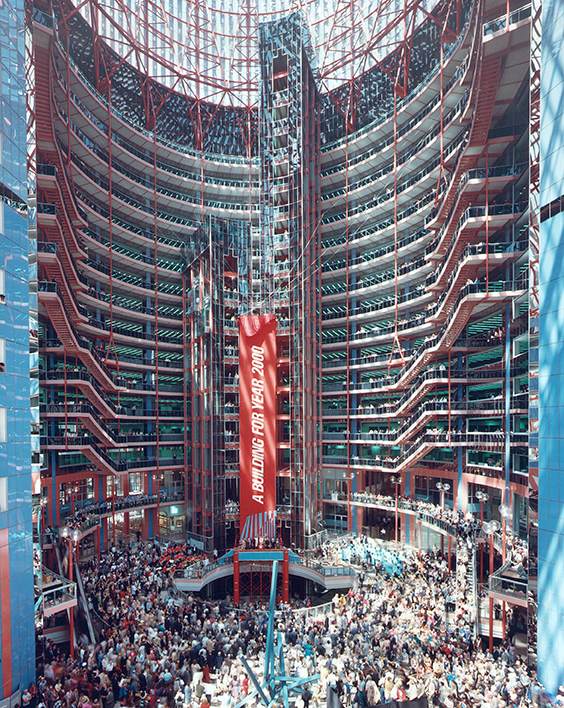
And, we find a few minutes to lament the likely demolition of the Thompson Center.

“I think it should be saved,” he asserts. “I realize that it does not have a lot of lovers. I realize that it is in really bad shape, but I am thoroughly convinced that if we tear down the Thompson Center, in 40 years, in 2060 or whatever, when they are publishing those lost Chicago books, the atrium of the Thompson Center will be in there and our kids and grandkids will be like, “How could they ever have torn that down?”

Hertz also professes his appreciation for four-plus-one apartment buildings, but as your humble host points out to him, he’s just wrong on that one.

You can listen to this show, just like a decent radio show, on SoundCloud. 

And you can read a transcript of the entire show HERE. CN transcript May 11 2017

Posted in Chicago Newsroom past shows | Tagged , , , , , , , , , , | Leave a comment

CN May 4 2017

CPS is enduring yet another of its “how-can-we keep-going-without-a-huge cash-infusion crises, except that, instead of its usual fall timing, this is a separate crisis just to figure out how it’ll finish the school year. The total amount needed this time? About 130 million or so.

Our panel this week says the CPS budget folk are searching even deeper than usual into the couch cushions for those extra millions.  Will they find them? Will Rahm Emanuel let the schools close on June 1 instead of June 20, despite the fact that he’s been claiming that the State’s failure to come up with money he says they promised would force an early closure? You know the answer. He and Forrest Claypool will find that $130m somewhere.

And, as you’ll see if you read toward the bottom of this post, today’s guests are strongly convinced that the Barbara Byrd-Bennett saga isn’t over, and that there could be more indictments to come.

That panel? Lauren FitzPatrick from the Sun-Times. Sarah Karp and Becky Vevea from WBEZ. We start by examining the $215 million that CPS thought Governor Rauner had agreed to pay. There was even legislation authorizing it. But it was tied to “pension reform,” and when the Guv said there had been no reform, he vetoed the money. But Claypool and co. had baked the money into the CPS budget already, and the crisis was fully formed.

“We all grilled them about how can you say this budget is balanced when you don’t have this $215-million in hand?” FitzPatrick explains. “But the alternative was they would have had to build a budget without it at the beginning of the schoolyear, and $215-million pays for a lot of teachers, a lot of programs, a lot of things that make school wonderful places to go and that goes toward like a quality education for kids. I mean maybe they were playing chicken all along, but that would have been tough to swallow at the beginning of the year, and they would have had to have eaten it themselves. It would have been on them. And now they’ve got a bad guy in Rauner and the State.”

Whether their political tactic will succeed and the public will lay the blame for this mess at Bruce Rauner’s doorstep is anybody’s guess. But Karp says so many parents felt caught in the middle and they’re mad. Mad, probably, at everybody.

“Most of the parents I talk to feel like right now they were in the middle of a big game and their children were the pawns and they are not happy, and they are mad at Claypool. I mean yes, they are mad at Rauner, but Rauner just seems like generally he’s just…you know he’s not doing anything. So what is happening with the politicians that you look right up to? And I feel like a lot of people are saying like what the hell just happened…So, we went through this whole song and dance and now they are like, ‘Oh, forget it. We actually aren’t going to cancel the school year.’ It’s like, what is going on here?”

“It was this “pension reform” which no one was ever able to articulate, like what were they actually supposed to accomplish,” adds FitzPatrick. “So even if you were a parent who wanted to make calls or write letters or go to Springfield, as CPS has been encouraging them to do, like what in the world were you encouraging? What were you standing up for? There was no bill. There was no specific language. It was just – we need pension reform…I can’t imagine how angry parents are who felt like they were caught in the middle of like… You know, the City made this threat that they never intended to make good on, and it threw a lot of people into a tizzy about what the heck are you going to do with your kids for three whole weeks?”

Becky Vevea injects a dose of budget reality at this point.  The $215 million hole (which has been cut to about 130 million because of cuts the system made a few months ago) is not about books and lunches and classrooms. It’s about pensions. And that colossal bill is due in a few weeks. CPS’ share is 721 million dollars.

“And so they’ve got (about) 600 of it,” Vevea reports. “It’s just a matter of we’ve got to look under the couch cushions or figure out some credit we can take out, and this is where the whole borrowing question comes in again. Short-term borrowing and can they bridge the gap to give the fund the cash it needs on time that it’s supposed to pay it without any penalties or interest.”

And one of those couch cushions is the individual school budgets which, for myriad reasons get spent on different schedules, and pity the poor principal who has money in the bank when the budget sweepers start nosing through the digital files.

“Principals all got locked out of spending on May 1st,” Vevea tells us, “So they are bracing for a big sweep of the accounts.”

“Which is funny,” interjects Fitzpatrick, “Because a couple of years ago you wanted to be squirreling away as much money as possible, so that when CPS took your teachers you had some money to keep your staff in place, except you had money in place and they came in and vacuumed half of it up.”

And, as Sarah Karp points out, the school system also has to deal with its steadily dropping enrollment.  “That’s hurting Chicago public schools’ budget, and so there’s like this double whammy. We still have these huge debt payments. We still have this, we still have that, and we’re losing money because we’re losing students, so it does make a very difficult budget picture.”

And, in the face of these issues, CPS continues to spend heavily on new  schools and school additions. And it continues to open new charter schools.

“Charters are a lot,” says FitzPatrick. “But then the Dyett High School reopened and is beautiful and all those programs are fabulous, but now that’s another school with added capacity and there are 11,000 fewer kids in the district than last year.”

“The district is shrinking,” asserts Vevea. “It’s constricting. It’s becoming smaller and they need to figure out a way to manage. You would think logically as you get smaller your budget shouldn’t continue to grow…I think that managing that is not a politically fun thing for anyone to do, but it goes back to school closings. The moratorium is going to be lifting. We closed 50 schools in 2013. That was five years ago and they said we are not going to close schools for five years. Well, it’s been five years. I think there’s going to be that question coming up too about how much do we need.”

“And some high schools are going away,” adds FitzPatrick.

Speaking of high schools, there is a dramatic change on the horizon. Education chief Janice Jackson has announced a unified High School application. “It’s an application that all eighth graders will fill out, every single one of them,” Vevea explains. “Right now you only elect to do it, and many have criticized that that draws the most motivated families, the wealthiest, most affluent people who can take the time to go visit schools and submit all these applications. Now every eighth grader will have to do it. They will rank one in eight I think, eight schools, one through eight and they will plug that into an algorithm, and every kid will get a match.”

“It’s a total choice, a total choice,” Karp asserts. “It’s a choice system and it’s totally… I mean yes, we’re keeping neighborhood high schools, but everybody applying means that we’re going into total choice for our high school system.”

“Everybody will get a match and then you can accept that match, or you can enter it again and get a second match,” Vevea continues. “If you reject both of your matches then you go to the school your address is assigned to, so your neighborhood high school.”

And here’s where it gets really interesting.  Vevea points out that the process will generate a rich dataset that will tell policymakers what schools rank where. A voluntary compendium of information about how well parents and students think schools are doing.

“And my understanding,” says FitzPatrick, “Is you’re not even necessarily applying to just the whole school, you are applying to maybe special programs that are within the school. So there might be a school that overall on the whole doesn’t seem to be impressive by its numbers, but they’ve got something special going on inside that building that has amazing graduation rates that’s doing spectacular things with kids. So I mean I think that’s where the surprises are going to pop out, these little…program within the building situations.”

And what about the charter high schools? Where do they fit in?

“Well, not all of them are in right now,” FitzPatrick reports. “Several have volunteered and said, ‘Great, we’re in,’ and the issues with the charters is each charter chain has a different application process…Janice Jackson has said she is going to work with the willing first, the coalition of the willing, and then she’s going to sweet talk a little bit. And then ultimately it sounds like she wants to use the charters’ renewal process to coerce any stragglers to join this so that, I mean how many years could that be?”

“It’s written into their contracts,” Vevea interjects.

“Four or five years at the most it sounds like everyone will be in,” FitzPatrick predicts..

We ask what effect, if any, Education Secretary Betsy DeVos and the Trump administration might have in Chicago and Illinois. Can they get vouchers implemented here? FitzPatrick has  a startling prediction.

“This is where the district and the charters have common ground.”

Any effort to implement vouchers here, which would allow parents to opt into parochial or private schools, could drive the often-squabbling district-run schools and charters into one another’s arms.

“I don’t know that I necessarily see this happening in Chicago any time soon,” FitzPatrick continues, “Because really, if you think about the families that would grab at vouchers in Chicago I have to think the first ones are dedicated proud charter parents, and then what happens to the charter schools?”

“I think that it can be a bit of a hype in some ways,” adds Vevea, “because I think that people also don’t realize that vouchers don’t… It’s not like they’re covering lab school tuition, and … even archdiocese tuition, depending on which school you’re picking, I mean we have yet to see what the federal government decides to do on this part of things. I mean we have yet to see if they move forward on it and what the amount ends up being, if there is an amount.”

The reality is that the government check won’t cover all the tuition, so it could have a perverse effect in which affluent parents just get some help paying a hefty private-school tuition, but poor parents who can’t make up the difference don’t get to participate.

Finally, the sentencing of Barbara Byrd-Bennett.

Since all three panelists were intricately involved in covering Byrd-Bennet’s tenure and her corruption charges, the conversation between them was animated and revealing. It starts at 46:30 on the video. They report that the former CEO ran from the courthouse after her sentencing. “I don’t think she’s ever run that fast,” observes Karp.

“One thing I keep saying is that I think that there is going to be more to this story.,” Karp asserts. “I think the inspector general will come out with something. I think there will be some other companies implicated in some various ways. I mean Becky and I did a story about how this one company that runs alternative schools was vendor A in her indictment and they are still getting money in Chicago. They are still around. They are also getting tied up with all the black pastors in the City who are very politically connected. I think the point is that she maybe was willing to play ball, and so the other companies that were willing to also play ball…”

“I agree with what Sarah is saying in that I think there’s a lot more to this story and that there are a lot of layers to peel back on,” Vevea adds. “Not just this one company and this one superintendent, but all of the companies that do business with the school district, and all of the people who go in and out of positions, both inside the school districts that they work with and into the companies that then they go work for…I think that what I saw with this and what I feel like happens in the world of education with all these companies feels a lot like with the banks and the regulators, and them going in and out of these revolving doors, and taking positions and climbing ladders that require you to bounce between two entities that really ought to be policed better. And I think there’s a lot of opportunity in there that Barbara just got caught.”

And in the realm of pure speculation, did Barbara Byrd-Bennett feel safe in her crooked activities because she felt the Mayor owed it to her once she was good soldier and close the city schools the mayor insisted she close? you be the judge.

Pretend we’re on the radio as you toss in the earbuds and listen on SoundCloud.

You can read a full transcript of this show HERE:CN Transcript May 4 2017


Posted in Chicago Newsroom past shows | Tagged , , , , , , , , , , , , , , | Leave a comment

CN April 27 2017


Two of Chicago’s most important journalists and researchers join our panel this week.

Mick Dumke and Alden Loury worked together years ago at the Chicago Reporter. (Investigating Race and Poverty Since 1972).  Alden went on to become the Reporter’s publisher, then joined the BGA as an investigator and reporter, and recently became the Metropolitan Planning Council’s Director of Research and Evaluation. Mick went on to a long career at the Chicago Reader, where he was widely celebrated for his comprehensive investigative reporting. Today he’s at the Sun-Times, where he works with the Watchdogs investigative unit.

Loury tells us about The Cost of Segregation, a recent and continuing project at MPC. He says that, based on research from other organizations, MPC looked at where Chicago stands compared to the biggest 100 cities in the U.S. (Chicago comes in around tenth in racial segregation). Then they looked at the median, and asked how different Chicago would be if it improved to that point.

“And what those numbers show,” he explains, “is $4.4-billion in additional black income, per capita income per year, 30% fewer homicides, and 83,000 more bachelor’s degrees, 78% of which would be attained by whites, the remaining 22% by African Americans and that would be over a 10-year period.”

Then the researchers asked, what if Chicago had been at that median level in 2000? “If we were at the median in terms of our black white segregation in 2,000, by 2010 we would have had 83,000 more people with bachelor’s degrees based on the percentages of African Americans and the percentage of whites with bachelor’s degrees in regions that are at the median or near the median.”

Dumke’s recent story in the Sun-Times deals with the quickly-increasing numbers of recent parolees who are getting arrested for “unlawful contact” with gang members after their release from prison. Dumke tells us that contact is at least in part due to the way people are released.

“There appears to be a complete lack of, almost complete lack of planning about how to release people into the community giving people the means to succeed once they re-enter society, and giving the communities resources to do something about it,” he explains.

“This is just a law that’s so open-ended that the police can basically stop anybody for anything,” he continues. “It’s like the old gang loitering law which was eventually found unconstitutional, or disorderly conduct at one point in time…and these kinds of nuisance  association kinds of crime which are really open-ended allow the police to sort of pick up whoever they want fundamentally. And there’s a context of police under pressure to do something about this, so they are going into neighborhoods that are just flooded with people on parole. Most of them have very few resources to do anything to change their lives around, very little help to do that, and they can essentially be arrested for getting a ride with somebody or just talking with someone who lives down the street.”

This problem is related to two contradictory pressures, Dumke tells us. Both the left and the right tend to agree that too many people are in prison in  the U.S., and there is an effort to let people with lesser offenses out. But when these parolees are released, they go back to the same places where they got into trouble in the first place.

“I personally don’t think it’s a coincidence that as the parole population has gone up and the state budget crisis has resulted in zero spending for re-entry services over the last two years, at the same time we’re having this crime spike.,” he asserts. “In fairness to the Chicago Police Department they are under extraordinary pressure to do something about a very complicated set of problems, and they’re doing what they’ve been trained and told to do which is to step up policing.”

The result has been a recent spike in arrests for parolee contact with street gang members. Dumke recalls the “stop and frisk” period a few years ago that resulted in hundreds of thousands of street stops until the ACLU and others intervened.

“I did a story a couple of months ago about stop and frisk looking at the numbers after the ACLU agreement went into effect. And it was like 3% of the people who were stopped and frisked were found to be with weapons. And so you know there are two arguments for justifications for this. One is you want to find illegal guns, and that number alone shows that that wasn’t happening. You know 97% of the people you were stopping didn’t have guns, so you weren’t getting those guns through this approach. The other argument of course is that well it’s a deterrent, so even if we don’t catch someone with a gun, then the word goes out you can’t walk around with a gun in Chicago, we’re going to get you at some point in time. But there’s absolutely no evidence that that deterrent has been in place. I mean during this time you know homicides and shootings have actually gone up.

Loury explains in detail the findings of his recent research showing that in suburbs where large proportions of its white residents move out, within a few years many of the jobs also leave. He cites Calumet City, where 63% of whites left between 2000 and 2010, and within a few years more than a quarter of the jobs also left.

“Calumet City is now a black community,” he tells us, “but the fact that it is a black community is going to carry some consequence. And it’s not fair, but it is the reality that we live in. The same thing you could say about neighborhoods like Auburn Gresham or North Lawndale, that when they were majority white they had a certain character and vitality to them. But when they became all black, even when the all black was relatively middle class it became much harder for those communities to make a case for people outside of those communities to visit, to shop there, even to travel through there, and it made it much more difficult for them to bring investment in, and that to me is the real crime with regard to this issue of segregation, because when communities gain a character in terms of their racial identity, it then seems to carry other aspects or other characteristics, which may not necessarily be true.”

You can pretend our TV show is a radio show by listening to it on SoundCloud.

And you can read a full transcript of this show HERE:CN transcript April 27 2017


Posted in Chicago Newsroom past shows | Tagged , , , , , , , , , | Leave a comment

CN April 13, 2017


“Lenient judges” and weak laws governing “repeat gun offenders” have been two of the reasons most often cited by Mayor Emanuel and Police Superintendent Eddie Johnson for Chicago’s appalling street crime and homicide rate. They’ve called repeatedly for stronger laws. Well, now they may have them, at least in part.

It’s been dubbed the Safe Neighborhoods Reform Act.

Senator Kwame Raoul, who sponsored the bill, was able to get it passed out of the Senate last week, and his bill now awaits deliberation in the House. It appears to have Governor Rauner’s support.

But while most of the publicity about Raoul’s bill has focused on increased penalties for “repeat gun offenders”, Raoul tells us there are other components, too.

Here are transcripts of selected remarks the Senator made on today’s show, along with the related time so you can watch the video, too.

(And, by the way, here’s where you can find a complete transcript of the entire one-hour discussion: CN transcript April 13 2017)

Getting a handle on our street violence involves more than just increasing penalties:    (2:55)  I am one who has consistently said there’s no singular element that’s going to do that job. You have to have different components. You have to have investment in communities, but you also have to have accountability for those who are committing these heinous acts. I argue you can’t wait until they shoot somebody to do something about it, so there are those who say the crime of illegal possession shouldn’t be taken as seriously. Well you’ve got to possess before you shoot. So what this does is it focuses in on repeat gun offenders.

The key is making the second and third-time offenses for gun crimes more stringent:   (7:58) The range for unlawful use of a weapon by a felon is 3 to 14. (years.) You sentence somebody who has just been previously sentenced to unlawful use of a weapon or murder or armed robbery or one of the offenses, and who goes out and gets another gun, you sentence them to 3 years. They have access to good time credit and it can cut that in half and if they participate in a rehabilitative program they could be out in a year and a couple of months.

The bill provides for judicial discretion, because mandatory minimums have been criticized for not allowing judges to deviate, or “depart” from the prescribed sentences:  And that is exactly why we created a mechanism within this bill to allow for departure, and we have a host of if you as a judge with the criteria that we allow for departing from the presumed minimum can’t depart for a case that’s worthy of it, then you don’t have the intellectual capacity to be sitting on that bench, because we have a pretty exhaustive list of rationale that you can use to depart.

Raul pushed back on the idea that all of our gun laws are too lenient. We ask, once you have committed a violent gun crime and the Police Department knows that you are a violent criminal who has shot somebody, is it still true that the laws are too lax, that they are too lenient if there’s a second violent offense? (22:29) I don’t think so. I wouldn’t make that argument. What I would say is, and this is part of the argument that’s been made against the bill that I just passed, is that part of the problem has less to do with the sentencing as it does with any apprehension of being caught, and so the (Chicago Police Department) clearance rates are low. What’s the greatest deterrent to crime is fear of being caught.

(33:50) Part of the clearance rate … and sentencing has a part to do with it, but bad tolerance of bad policing over decades has a lot to do with the bad police community relations. And in order to fight crime you need good police community relations. If people don’t trust the police they don’t cooperate with the police. If people don’t cooperate with the police you don’t solve crimes.

The law in question defines as “Aggravated Unlawful Use of a Weapon” the crime of having a gun on your person when arrested. You don’t have to  have used, or brandished the weapon. Raoul says there’s a difference between the first and second occurrences of this crime and that’s where judges come in:   We’re focused on the person that’s more likely to be the shooter. Now the argument has been made, well these are mere possession cases. They haven’t shot anybody yet. 

(35:05) Yeah, but let’s wait for them to shoot the gun, huh? You know, you’ve got to have the tools to deal with these offenders, and you’ve got to have some level of faith that there will be discretion utilized along the way. There are three levels of discretion again, there’s the Chicago Police Department, there’s the State’s Attorney’s Office, and there’s the judiciary.

 I think it’s important for us as policymakers to provide guidance. That’s our job, and in doing so, in your hypothetical one of the things that you illustrated was somebody that’s distinguishable from somebody who did it for the first time. And the implication of your question was that that person should receive a more severe sentence than somebody who did it for the first time. And that’s precisely the aim of the legislation that we’ve proposed.

(29:14) So one of the things we look at is age, right, maturity. We look at whether or not the person is working and a contributor to society. We give that guideline in the bill. See, many people have criticized the bill as just a mandatory minimum, which it’s not, and said, “Well you’re not considering all these factors.” And if they read the bill they would see those factors very clearly enumerated, but you have to read in order to get there.

29:52) We can walk and chew gum. We can work on comprehensive policy that affects violence and hand in hand hold people accountable. We ought not be a society where people feel compelled to carry just to walk down the street. We’ve got to confront that head-on with investment in community. We’ve got to deal with the untreated trauma that makes people have that feeling, right.

Raul doesn’t agree that most judges are “too lenient”:   (42:48) I think every court room is different first of all, and I haven’t analyzed every judge, and so I don’t join the chorus in saying that judges are being too lenient. I think it’s my job as a policymaker to say, “Hey, we expect a repeat gun offender to be treated differently from a first-time offender. Yet we recognize that you judge are the person hearing all the facts of the case and you need the flexibility to depart downward in certain circumstances. And so distinguish my advocacy from the Mayor’s or Eddie Johnson. I’m not pointing the finger at judges. However, I am doing my job as a policymaker saying that yeah, these people should be distinguished from these people, and I don’t think that there’s a strong argument against that.

Sen. Raoul says it’s appropriate to consider someone caught a second time with an illegal gun as someone very close to committing a violent crime:  (50:50) Yeah, that’s a fundamental principal of sort of judicial evaluation and sentencing whether or not you did it before. That’s a fundamental evaluation of parenting, you know. You did this once. I told you it was wrong and you did it again. A teacher in a classroom, somebody has done something once and you may cut him slack. You do it again they get detention or suspension or something.

Sen. Raoul is concerned about the results of yesterday’s FOP election, in which a large majority of Chicago’s police officers voted for Kevin Graham as their new union leader. It signals tougher contract negotiations, and possibly a greater resistance to police reform efforts:   (38:20) Yeah, it’s a challenging development given that during the midst of negotiating a contract, a contract that has been a bit overly protective and created a circumstance where it’s a little bit more difficult for people to get to the truth of a lot of the incidents, so we’ll see how that develops when the contract is negotiated. One thing that I’ve advocated for is licensing of law enforcement officers. I’m an attorney, I’ve got to be licensed. Medical professionals have to be licensed. Hair dressers and barbers have to be licensed. There’s got to be another layer of accountability beyond just what happens at the local department.

You can also listen to this program on your phone.  Here’s the SoundCloud link.


Posted in Chicago Newsroom past shows | Tagged , , , , , , , , | Leave a comment

CN April 6 2017

Will Rahm Emanuel follow through with his promise to implement significant police reform in Chicago despite the utter lack of interest from the Trump administration?

Would an increase in the level of punishment for getting caught a second time with a loaded, un-registered handgun make serious progress against our plague of street violence?

The Chicago Reporter’s Curtis Black joins us this week to analyze these and other issues. Fixing the CPD, he says, is complicated and difficult. But perhaps most important, it’s going to be really expensive. That’s due, at least in part, to the fact that this mayor and his predecessors have consistently short-changed the police.

“It takes resources and Chicago has been in this fiscal crisis for a long time,” he explains. “And if you look at the report and you remember back to Emanuel’s first budget where he called for $109-million in cuts and shut down police stations, and now you have sergeants supervising 20 or 40 patrol officers, and that’s one of the many problems. You have a tiny training department. You have three mental health counselors for the entire force…So, at the same time that Emanuel has decided to hire 1,000 officers there’s a real question of how you’re going to prioritize the limited resources that we have.”

You can find a directory to Curtis Black’s thoughtful commentaries HERE.

And you can listen to the entire show on your smartphone on SoundCloud.

And you can read a full transcript of this show HERE: CN transcript April 6 2017


Posted in Chicago Newsroom past shows | Tagged , , , , , | Leave a comment

CN March 30 2017


Just look at the veteran reporters, historians and political operatives on the cable news channels. They’re slowly losing their composure. They’ve run out of ways to say “unprecedented” and “astounding”. We’re in a political situation unlike anything in our lifetimes.

Kitty Kurth is a Chicago-based political consultant. “Mostly I’ve just been under the covers. I will fully admit it,” she laughs. ” Putting on something other than yoga pants (was) a big deal for me in the morning.”

But now, after reflection, she says a clear pattern is emerging. It’s a frightening combination of powerful social media tools, an emboldened Russia and an American electorate hungry for some kind of radical change. And it’s not just the U.S. that’s vulnerable.

“And when you look at how all this happened,” she explains, “Breitbart and their friends were trying to influence our election. Not only was it the Russians trying to influence our election, so was Breitbart. In a very similar way, right now, real time, the same thing is going on in all the European elections. In our news this week there’s been a lot of talk about Russian influencing of the European elections. Breitbart at the same time is doing the same thing.”

For Kurth, this new political environment gets personal. A lifelong Democrat, she’s spent much of her career trying to build bipartisan coalitions. She was instrumental in creating the Concord Coalition in 1992, in search of an effective way to reduce budget deficits and promote economic growth. Today, she admits, “bipartisanship is dead.” But not, she insists, forever.

“I think that some of the people in Congress have been there long enough to know that nothing is forever. They are not going to have the majority forever and that they do have to talk to their democratic colleagues in order to really get something done. I think that ironically the Russian investigation in the Senate with Richard Burr and Mark Warner, I think they are working together very collegially and I think people will see in a very visible way how government can work when Republicans and Democrats work together. They don’t have to agree on everything, but they have to talk and they have to work together.

That’s a time Kurth can’t wait for, because she says she’s feeling very distant from her long-time Republican friends. “When I look at what they’re writing I know that’s not what they really feel. You know I’ve had real conversations with them about why they are Republicans and what they respect in their party. And it’s like everybody just has put on these Trump cone heads and they have been brainwashed.”

Kurth doesn’t have a favorite candidate – at least not yet – in the emerging Illinois governor’s race. But as you might expect from a Democratic operative, she’s optimistic about Daniel Biss, Chris Kennedy, Ameya Pawar, J. B. Pritzker and Kurt Summers,

“The good news is I think any one of them would do a better job than Governor Rauner,” she enthuses. “That’s the good news for me.  I think all of them are really smart guys and probably have a lot of really interesting ideas, and I think right now in Illinois not only do we have a financial deficit, but we’ve got a deficit of ideas.”

“Things in Springfield are so bad that I have taken to defending Mike Madigan,” she continues.  “Because, if you look at the face of it, Mike Madigan has been there in Springfield under how many different governors? And there was always a budget. The problem in the equation, the variable in the equation is not Mike Madigan, it’s Bruce Rauner. The reason why we don’t have a budget, to be really clear is Governor Bruce Rauner. And he can try and pin it on the Democrats and try and pin it on Mike Madigan all he wants, but objectively speaking that part of the equation hasn’t changed.”

Kurth was a part of the brief effort last year to draft Joe Biden for president, something he ultimately rejected as he mourned the death of his son. “Well,” she explains, “With all due respect to both Bernie Sanders and Hillary Clinton, who I think either of them would have been a great President, I’m a little pissed off, because I was part of the draft Biden (movement). Now I appreciate and respect his reasons for not running. I don’t know if in this political climate that existed anyone could have beaten Trump because of what I believe was a “wave election” and in the end things worked that way. That said, I wanted Vice President Biden to run, and not because I had anything against Sanders or anything against Hillary Clinton, I just like Joe Biden and I like his approach to life and his approach to government.”

Democrat or not, Kurth isn’t willing to let Hillary Clinton’s campaign off the hook for what she considers serious tactical missteps. “Putting on my campaign manager hat I never realized until the last part of the election, because I was focused in my own little bubble that Hillary Clinton’s first strategy hadn’t been to go to the states that she lost to Bernie Sanders, because from a strategist standpoint that’s like rule #1,” she explains. “You don’t go to the places where they already voted for you. Those you don’t worry about. You go to the places where they didn’t vote for you, talk to them first, get them on board and then go back to the places where you won.”

There’s concern that Mayor Emanuel might be easing up on his stated desire to reform operations in the Chicago Police Department.  Despite recommendations outlined in a Department of Justice report and an Accountability Task Force he himself commissioned, most of the recommendations seem to be unanswered months after their release. Kurth believes Emanuel remains distant from the average Chicagoan, and that confidence-building is needed “Rahm needs to go out into the neighborhoods and talk and listen,” she asserts, “and not in a closed way where his people give out all the tickets and say everybody is in the room. He needs to actually talk to people, and I think on the issue of the police, on the issue of you know, many things, there are a lot of people who would have a much higher opinion of him and his ability as Mayor if they met him and talked to him.”

You can think of this TV show as pretty good radio, by listening on SoundCloud.

And you can read a transcript of the entire show HERE: CN transcript March 30 2017

Posted in Chicago Newsroom past shows | Tagged , , , , , , | Leave a comment